The Much Misunderstood Mark VI
By Jim Farrell
Originally published in the September/October 1997 issue of Continental Comments (Issue # 218).
In the mid-1970s, when the Mark VI was conceived, Lincoln-Mercury product planners decided it should have all the interior room of previous Marks, be smaller on the outside, weigh substantially less and retain the same classic lines the Mark Series was famous for. No, it wasn’t as impossible as it sounds. By 1976, the Mark VI’s designers had met the goals the product planners had set. By the time the new 1980 Mark VI was introduced on October 12, 1979, Lincoln-Mercury Division thought it had one excellent automobile and they expected their market penetration to remain strong. By the end of the 1980 model year, Mark VI sales had plunged by more than 50%. What happened had less to do with the Mark VI itself than with the economy and government regulations that relegated big cars like the Mark V towards the same fate as the dinosaur.
The Mark V was to be the first downsized Mark Series Lincoln, but engine availability and other factors dictated that it be approximately the same size as the Mark IV it replaced. When it came time to design the Mark VI, Gale Halderman, who was in charge of the Lincoln-Mercury Design Studio and his executive stylist, John Aiken planned to build a car even smaller than the Mark VI turned out to be. The availability and use of the mid-sized Mercury Montego chassis dictated that the car they originally designed as the Mark VI be up sized. A really downsized Mark would have to wait until the 1984 Mark VII.
Halderman says that the focus groups that offered opinions on the final design of the Mark VI gave it the highest marks given any of Ford’s contemporary cars, except for the rear taillights, which originally extended up and over the top of the fenders on the prototypes. Comments from almost all of those in the focus groups said the Mark VI was great, except for “those funny looking taillights”. Needless to say, the “funny looking taillights” were changed.
Halderman and John Aiken, as the primary designers of the Mark VI, designed it to appeal to a specific group—well off, middle age or older men who wanted a sporty looking four passenger car, and that’s what the Mark VI is. The Mark VI had the misfortune of being designed at a time outside influences were set to conspire against it, starting just before the time it was introduced. Although Halderman didn’t know it at the time, in many ways, his original instinct that the Mark VI should be smaller was right on the money.
In the early 1970’s, the government also became more involved in the automobile business, even dictating some traditional design aspects. Government regulation is sometimes given as the primary reason for the Mark VI’s poor sales.
While there were a lot of regulations the automobile industry felt was strangling it, those regulations affected all manufacturers the same. Government regulations were not the reason Mark VI sales plunged. In 1979, a second oil crisis, this one caused by the Iranian Revolution, hit the Western World. The demand for all big cars plummeted. Just after the Mark VI was introduced, interest rates also shot up, on their way to a record 20%. By the end of 1980, the demand for big cars bottomed out, rebounded and then bottomed out again.
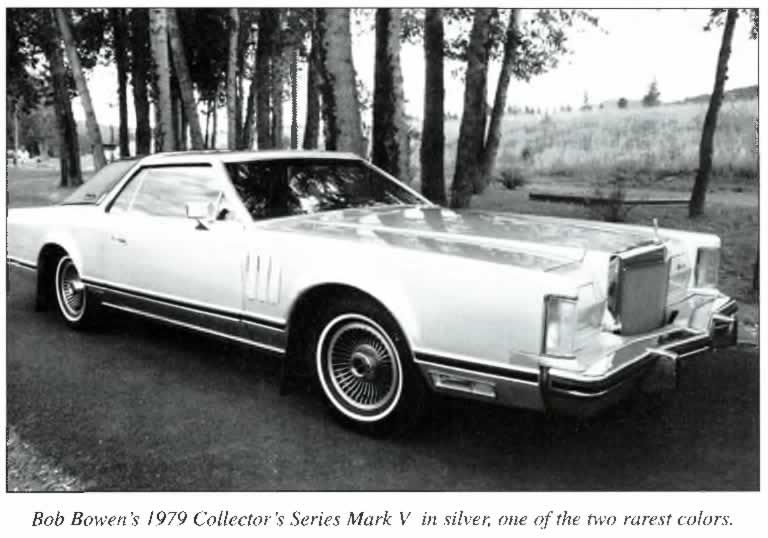
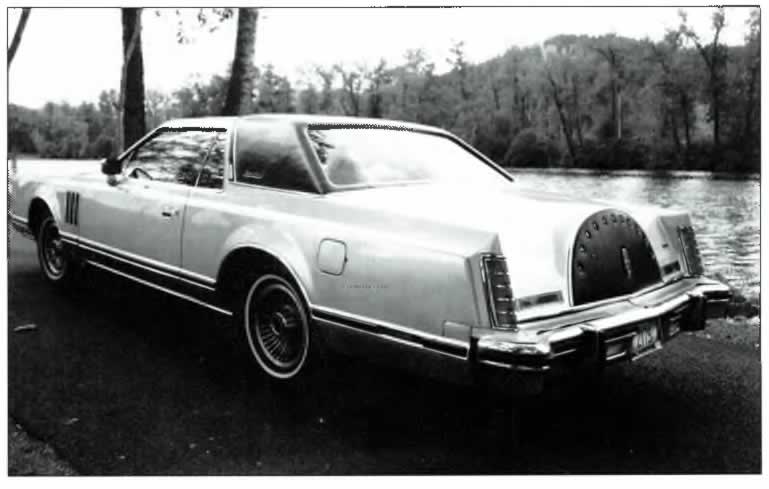
The Mark VI was not the Mark V. The perception of many, at the time, was that the Mark VI should be bigger than the Mark V, which was bigger than the Mark IV, which was bigger than the Mark III. The Mark III, IV and V were sporty, uncompromising big cars. The Mark VI went the other way. It was eleven inches shorter and 930 pounds lighter than the Mark V. The Mark VI was also 1.7 inches higher than the Mark V and the window line was lowered giving the Mark VI a slightly different image than the sporty looking Mark V. The Mark VI was also designed to appealed to a slightly older age group than the Mark V on the theory that baby boomers were growing a little older. (Apparently, many of those baby boomers weren’t old enough to appreciate the Mark VI.) Although it hasn’t been well publicized, the Mark VI also used many Lincoln Town Car body panels.
By 1985 over 200,000 Town Cars were sold. By 1988, over 400,000 Town Cars were sold. In many ways they look like Mark VIs even though 1983 was the last year the Mark VI was built. If anything, the Mark VI was a few years ahead of the market. If the baby boomers were too young in 1980-83, they were just the right age to buy the Town Car in 1985-89.
Styling of the 1980 Mark VI followed the rest of Ford’s product line but it did a better job of it. All Ford products of the late ‘70s were square and followed the so called “three box” theory of design. The Mark VI was not as square as the ‘77 Fairmont or the ‘79 Thunderbird, but there was a family resemblance. By the early 1980s, the square look had run its course at Ford Motor Co. and by 1984 the new Mark VII showed the more rounded aero look ushered in by the 1982 Taurus and Sable.
In 1980 and every year the Mark VI was produced, sales were a disaster. Even if you take into account the all new four door Mark VI, in 1980 total Mark VI sales — two door and four door — were a little less than 39,000 compared to the almost 76,000 Mark Vs produced in 1979. In 1981-83, Mark VI production hovered between 26,000 and 36,000.
Just because the Mark VI didn’t sell well doesn’t mean it was a bad car. Quite the contrary, the Mark VI was probably the finest Mark series automobile built as those lucky enough to own them today will attest. The Mark VI was the quietest Mark built to date. The steering was also much quicker and the car had a better seating position and more headroom. The biggest advance, however, was the industry’s first automatic overdrive transmission that gave the Mark VI about a seven miles per gallon advantage over the Cadillac Seville or the Mark V. The most important difference on the Mark VI was inside. Even though the exterior is smaller all the way around, Mark VI interior measurements were increased over the Mark V and even bettered the 1980 Cadillac!
After some quality control problems in the late 1970s, by the time the Mark VI was built, quality was king. After many years of “big” engined Marks, in 1980 the 400 and 460 cid engines were dropped in favor of the 302 and the 351 cid Ford corporate engines. Both engines were used on the 1980 Mark VI and both had Ford’s third generation computerized Electronic Engine Control. Mark VIs with the 302 came with fuel injection and those with the 351 cid optional Windsor engine came with the two-barrel carburetor used on the Versailles.
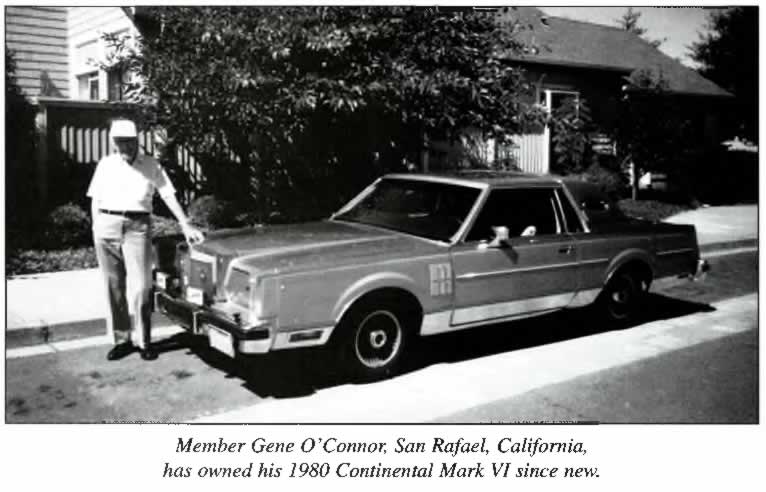
Reliability plus comfort plus classic good looks make the Mark VI a real bargain and its only a matter of time before more people begin to realize it. One who has always recognized the superiority of the Mark VI from the day he bought his new is Gene O’Connor of San Rafael, California. After five new Cadillacs, Gene decided that it was time for something else. By 1980, Gene and many others felt Cadillac had lost its luster. After comparing the Cadillac and the Lincoln Mark VI, Gene came to the conclusion that the Lincoln Mark VI was not only better looking, it had the Cadillac beat in just about every other way. Cadillac had already started to downsize and to many former Cadillac owners, it looked and felt that Cadillac had abandoned the luxury car buyers who weren’t ready to downsize yet — if ever! (Gene says he was unhappy with the last two Cadillacs he owned.) Gene was one of the first of a whole host of former Cadillac owners who helped close the gap between Cadillac and Lincoln in the 1980s.
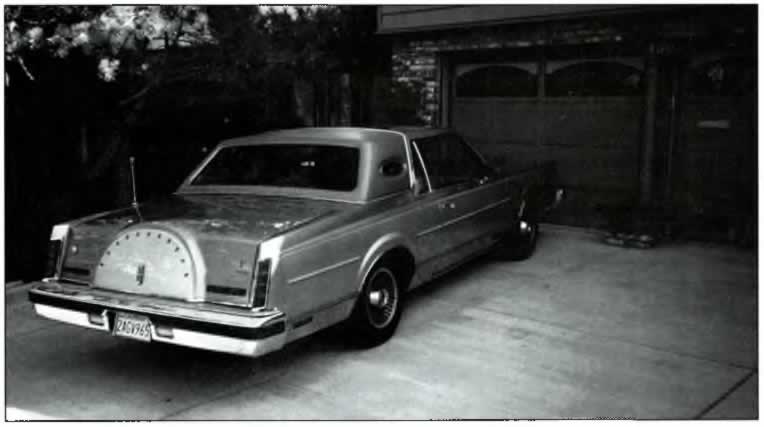
In November, 1979, Gene ordered a new Mark VI four-door from Marin Bay Lincoln-Mercury. Since it was the first year for the Mark VI four-door, Gene felt he’d like to duplicate the four doors of his previous Cadillacs. When the four-door Mark VI that Gene ordered came in, he didn’t like the color. The dealer offered to order another Mark VI for him, but in the meantime, Gene got a look at a silver and gray metallic Cartier Designer Series Mark VI two-door that had just come in and he liked it so well he changed his mind. Because Gene wanted the 351 cid Windsor engine and a full size spare tire, the dealer was able to locate the exact car he wanted in San Diego and soon Gene was the proud owner of a two-door Mark VI. He has kept it in showroom new condition for the past 17 years and 128,000 plus miles. Gene bought his Mark VI on January 11, 1980 for $17,350 plus license and sales tax and it came with every option available, except a moonroof.
About 15,000 miles ago, Gene had a Ford rebuilt 351 cid Windsor engine installed. He has also recently replaced the transmission, the carburetor, the water pump and the alternator, all of which he sees as normal maintenance, given the mileage on his car. Gene’s Mark VI has seldom been driven in the rain, has had liberal and frequent amounts of Lexol applied to the leather upholstery and has been frequently waxed. The most rain the car has ever seen was on the way to the Fresno Western National Meet in 1996, where the car won first in class. The paint and the vinyl top are original and like new. For the miles on the car, Gene’s Mark VI is in remarkable condition. Clearly, high mileage and daily use do not mean your Lincoln can’t be a show car.
In 1996, Gene made the decision to keep his Mark VI, instead of trading it off, because it is the last of the classic Lincoln Marks and it is as comfortable as any new car on the road today. Gene also finds that as the years pass, he gets more comments on the great looks and condition of his Mark VI and that reinforces his determination to keep the car and keep it in like new condition. When Gene looks at new cars, there’s not much the Mark VI doesn’t have that he sees on new cars, Lincoln or otherwise. The dash is digital and it has a key pad entry system and they both work flawlessly.
After riding in a couple of friends’ Mark VIs, there’s one piece of advise Gene has for those collectors thinking about buying a Mark VI. Be sure it has the 351 cid engine. Gene just doesn’t think the the 302 has the power needed to climb hills the way a Lincoln should.
We hope to hear from Gene in another 17 years about how his Mark VI is doing. One thing’s for certain; it will still be one of the best looking Lincolns around.
 Part V, from Continental Comments #78.