Originally published in the November-December 2018 (#345) issue of Lincoln & Continental Comments magazine.
By Jon Wessel
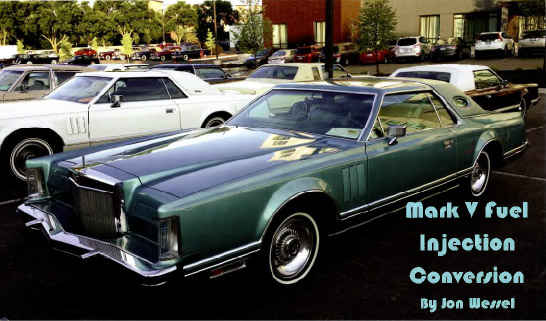
As some of you may recall from a previous article in the Lincoln and Continental Comments, I did not make it home when I picked up my turquoise 1979 Mark V. It left me stranded on the side of 1-44 after suffering a severe case of vapor lock. Even after getting it home and moving and insulating the fuel line, I still had vapor lock issues. In addition, the car was hard to start, did not always kick up on high idle on a cold start, bogged just off idle, and was not very responsive. I had the carburetor adjusted twice, but there was no real improvement. I made the decision to take it to the closest Lincoln dealer, twenty-five miles away. I barely made it, limping in at forty mph from the freeway. Their fix was to install a new carburetor. This did help somewhat, but was not a cure.
The LCOC meet in Kalamazoo, MI, was soon upon us, but the Mark still wasn’t really ready, despite the amount of time spent in the shop. I really wanted to take the car and show it off, since it had never been shown at an LCOC meet. With some trepidation, my wife Debbie and I hit the highway for Michigan. After an hour or so on the road, it became apparent that we were going to have problems. The car would start to lose power and that was a signal to pull off the highway, pop the hood, and let the engine cool. Vapor lock had reared its ugly head. In addition, pulling out into traffic was dicey, since the car would bog down just off idle. Passing was all but impossible. We made it to Kalamazoo without being stranded, but since our first travel day back home to Missouri was on a Sunday, I had some concerns about the return trip.
I do business with a company called BND Automotive, and have had several conversations with the owner, Brian Schubert. Brian is an absolute genius when it comes to gas and oil, and can easily talk way above my head on those topics. I use his products in my Hemi-powered cars. I gave Brian a call and explained my situation. He suggested installing an electric fuel pump and running ethanol-free 91-octane gas with his fuel additive. I was already using his fuel additive and had some with me. I found a Ford dealer in Kalamazoo who would install the electric fuel pump I bought at O’Reilly’s. Driving around town after the electric fuel pump was installed, the car felt better and that gave me more confidence for the drive home. We did indeed have an uneventful trip, but the car was still not running right.
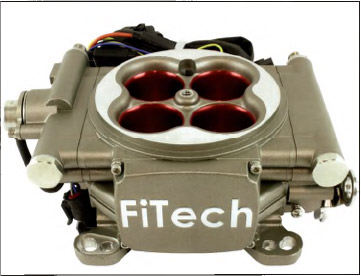
Upon returning home, I had a conversation with Carl Cones, whose shop built my Hemi-powered ’62 Lincoln Continental. Carl has preached the fuel injection gospel for several years and with good reason. We decided to order a FiTech fuel injection unit for the Mark V, along with the requisite high-pressure fuel pump. Carl uses the FiTech brand almost exclusively because he likes how easy it is to set up and tune.
When I got the Mark back from Carl, I could tell an immediate difference. Fuel injection does not necessarily add horsepower or increase fuel mileage, but in my case it made a huge difference in the driveability of the car. Gone was the hard starting, choke issues, bogging, poor throttle response and most thankfully, vapor locking. I couldn’t believe I was driving the same car!
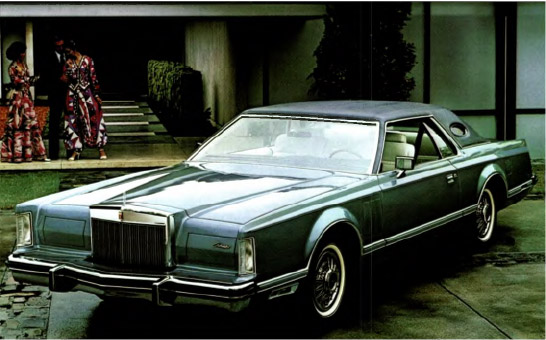
ABOVE: Jon Wessel’s lovely 1979 Mark V at the 2018 Mid-America National Meet.
I drove the car around town for a while as a shake-down test and it performed perfectly. We had a Midwest Region get-together in the St. Louis area, and I decided to drive it up there. It was a 450-mile round trip, and the Mark V performed perfectly. I was ecstatic. That experience gave me the confidence to tackle the long trip to the Mid-America National Meet in Minneapolis this past July. Over the course of 1,330 miles, we didn’t have a single hiccup. Once again, the car performed flawlessly. I continue to run 91-octane fuel and try to find ethanol-free fuel if I can. I also use the fuel additive from BND, which increases the effective octane of the fuel, helps combat ethanol, and has other benefits.
Depending on the fuel injection unit chosen and the fuel pump selected, the cost of the conversion will likely be between $1800 and $2500 installed, depending on the labor prices in your area. From what I understand, someone with basic mechanical skills can install and tune the unit. The installation is undetectable on the Mark V unless the air breather was removed. Obviously, if you are having your car judged, a modification such as this could be an issue. Since I drive my car, it was an easy decision to go ahead with the fuel injection and then place it in exhibition class. Before the fuel injection installation, I was unhappy enough with my Mark V that I offered it for sale. Now, I truly love driving it and would not think of selling it.
BELOW: FiTech fuel injection system installed on Jon’s car.